

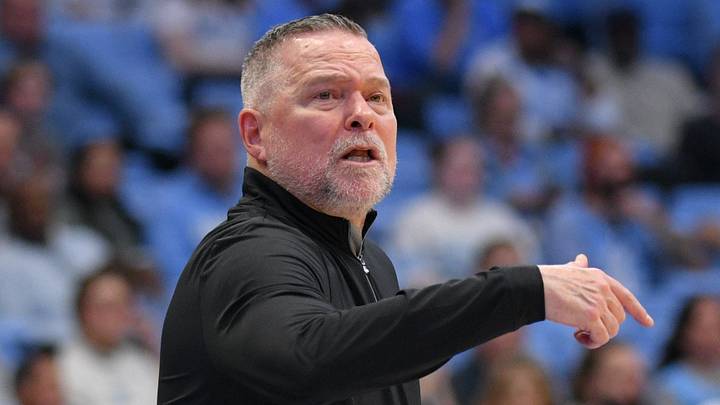
Up by more than 30 points against Monmouth on Monday night, Michael Malone felt the need to burn a timeout.
Now, why would a head coach be so concerned with what was happening on the court when the game's outcome was essentially decided?
Well, if you've been paying attention to Malone throughout the early portion of his tenure at North Carolina, you probably already know the answer.
Discipline.
When asked about his decision to use three in-game timeouts against Monmouth, including one while the Tar Heels held a commanding lead, Malone revealed the message he delivered to his team at halftime.
"I told them at halftime, and I said, 'We are not playing the scoreboard,'" Malone said. "This is not about Monmouth. This is not about the scoreboard. This is about us getting better, building better habits."
Michael Malone refuses to let UNC get complacent
One of Malone's biggest frustrations throughout the early portion of the season has been UNC's inability to put together a complete 40-minute performance.
The Tar Heels have shown flashes of just how good they can be, but they've also developed a tendency to relax after building significant leads. That habit came back to haunt them against Georgia, and Malone expressed similar concerns following UNC's victory over Marshall on Friday night.
Even with the Tar Heels comfortably ahead against Monmouth, Malone wasn't willing to overlook those same mistakes.
"This has been something that has plagued us early in the season, our inability or unwillingness to play for 40 minutes," Malone said.
The head coach of the Tar Heels acknowledged that human nature can take over when a team builds a substantial lead. However, he made it clear that he won't let the circumstances of a game dictate his expectations.
"Just because you're up by however many points, I'm not just going to sit idly by and watch that," Malone said. "I just can't do that. I'm going to stop it, correct it, and make changes if I have to."
It's an encouraging mindset to hear from Malone, especially as the level of competition is set to increase significantly over the next few weeks. Let's face it: the mistakes that the Tar Heels can get away with while holding a 30-point lead against Monmouth could ultimately be the difference between winning and losing against a quality opponent.
Malone understands that, which is why he's treating every possession as an opportunity to reinforce the habits he wants his team to develop.
Sure, he could've sat back and enjoyed watching his team cruise to a lopsided victory. Instead, he used the opportunity to continue teaching, demanding more from his players even when the scoreboard suggested they had already done enough.
For Malone, the standard doesn't change based on the opponent, the time remaining on the clock, or the score margin. Whether the Tar Heels are up by 30 or down by three, he expects them to play the same brand of basketball.
Malone is heavily-invested in setting the culture and habits he wants his UNC teams to be built around. He's certainly using every scenario he has to continue teaching his team to help them develop in the long run.
Who knows: those lessons learned in blowout wins can help you when other games are on the line.
 Add us as a preferred source on Google